Mastering Engineering Management: The Certified DevOps Manager
Introduction
In the early days of software development, roles were very clear. Developers wrote the code, and operations teams made sure it ran on the servers. Then came DevOps, which tore down those walls. We started talking about collaboration, automation, and shared responsibility.
But as the years have passed, something else has happened. The systems we build have become incredibly complex. We are no longer just managing a few servers; we are managing global networks, cloud-native architectures, and massive amounts of data. In this environment, a "Senior Engineer" isn't enough anymore. Companies need people who can see the big picture. They need leaders who can align technical choices with the goals of the company.
This is where many working engineers feel stuck. You might be the best person on your team at fixing a broken pipeline, but do you know how to build a team that never breaks the pipeline in the first place? Do you know how to talk to a CEO about why the cloud bill is so high? These are the skills of a manager. And because the industry is moving so fast, learning these on the job can be slow and painful.
The Certified DevOps Manager course is designed to take that decades-long learning curve and turn it into a clear, actionable roadmap. It’s about moving from being a "doer" to being an "architect of flow."
Comparing the Engineer and the Manager
Before we dive into the details, it is helpful to see exactly how your daily life changes when you move into a management role. It is not just a change in title; it is a change in how you think about problems.
| Area of Focus | Senior DevOps Engineer / SRE | [Certified DevOps Manager] |
| Daily Work | Fixing bugs, writing scripts, tuning systems. | Removing blockers, coaching teams, setting strategy. |
| View of Tools | "How does this tool work?" | "Is this tool the right investment for our goal?" |
| Success Metric | High uptime and fast deployments. | Business growth, team health, and high ROI. |
| Communication | Talking to other engineers about technical specs. | Translating technical needs into business value for stakeholders. |
| Risk | Technical failures and system crashes. | Budget overruns, security leaks, and team burnout. |
| Horizon | The next sprint or the next release. | The next quarter and the next year of the company. |
A Deep Dive into the Certified DevOps Manager Journey
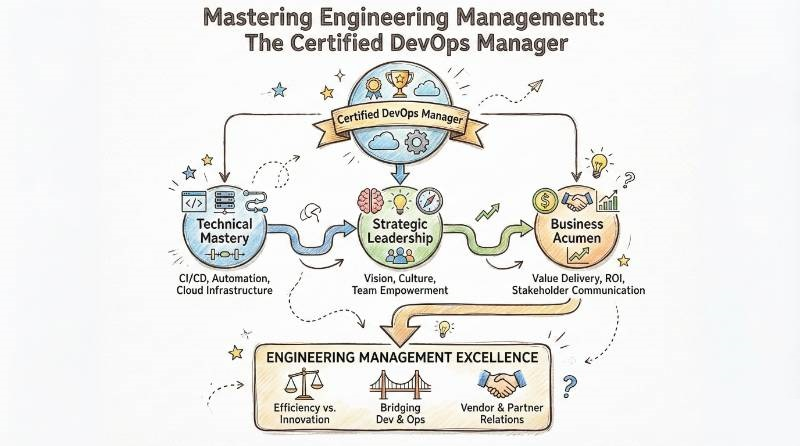
When we talk about this course, we aren't talking about a simple certification you get by passing a multiple-choice test. This is a deep dive into the philosophy of modern engineering. It covers the pillars that make an organization successful in today’s market.
1. Strategic Leadership and Planning
Leadership isn't about giving orders. It’s about creating a clear path so that everyone else can do their best work. In this course, you learn how to build a DevOps roadmap. This involves looking at the current state of a company and figuring out where the real problems are. Often, the problem isn't the technology; it’s the way teams talk to each other. You learn how to set goals that actually matter—not just "deploy more often," but "deploy in a way that helps the business grow."
2. Managing the Culture (The Human Element)
We often say that DevOps is about people, but we spend most of our time talking about tools. A manager knows that tools are useless if the people using them are unhappy or scared. This course focuses heavily on how to build a "blameless culture."When something goes wrong—and it will—how does your team react? Do they point fingers, or do they look for the flaw in the system? A Certified DevOps Manager is trained to build environments where engineers feel safe to innovate and make mistakes. This is the only way to achieve true speed and reliability.
3. FinOps: Taking Control of the Budget
The cloud has made it very easy to spend money. It is not uncommon for a company to see its cloud bill double in a year without knowing why. As a manager, the budget is your responsibility.The curriculum teaches you the basics of FinOps. You learn how to track costs, how to spot waste, and how to explain those costs to the finance department. Being able to say, "We spent this much to gain this much speed" is a superpower in the corporate world.
4. Security and Compliance (DevSecOps)
Security can no longer be an afterthought. It has to be part of the daily workflow. But a manager’s view of security is different from an engineer's. You aren't just looking for vulnerabilities; you are looking at risk management. You learn how to build security into the heart of your delivery process so that it becomes a help rather than a hurdle.
5. Measuring Success with Data
If you can't measure it, you can't improve it. The course teaches you how to use data to lead. Instead of guessing how the team is doing, you learn to look at "DORA metrics"—things like how long it takes to recover from a failure or how often a change causes a problem. These numbers give you the evidence you need to ask for more budget, hire more people, or change a tool that isn't working.
About the Provider: Why DevOpsSchool?
When you choose to invest your time in a certification, you want to know that the people behind it have actually done the work. DevOpsSchool has been around for a long time. They have seen the industry go through many changes, and they have trained thousands of engineers across the globe.
What makes them different is their focus on practical reality. Their trainers, like Rajesh Kumar, are veterans who have managed large-scale systems for decades. They don't just teach you the theory you can find in a book. They tell you what actually happens in a real company when a migration goes wrong or when a budget is cut.
They are a highly credible provider because they understand the global market. Whether you are in India, Europe, or the US, the principles they teach are the same because the problems faced by large engineering teams are the same everywhere.
The Real-World Career Benefits
Becoming a Certified DevOps Manager isn't just about a title. It’s about changing your career path.
- Higher Influence: You move from the back room to the board room. You become a person who makes decisions rather than just someone who executes them.
- Global Demand: There is a huge shortage of people who understand both the deep tech and the high-level business. This certification makes you a top candidate for leadership roles anywhere in the world.
- Salary Growth: Managers in the DevOps and SRE space are among the highest-paid professionals in tech. Companies are happy to pay a premium for someone who can reduce their costs and increase their reliability.
- Job Security: Tools come and go, but the ability to lead a team and manage a business is a skill that will always be in demand.
For more details on the specific modules and how to sign up, you can visit their official page: Certified DevOps Manager.
Common Mistakes to Avoid as a Leader
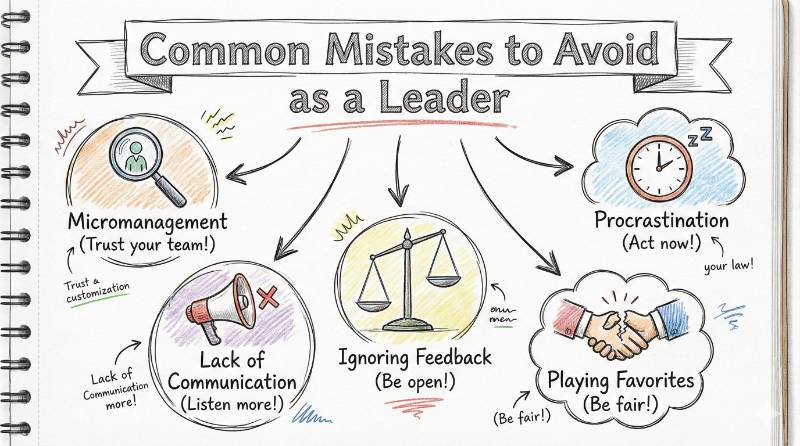
Transitioning into management is full of traps. I have seen many brilliant engineers fail in leadership because they couldn't let go of their old habits. Here is what to watch out for:
The Micromanagement TrapAs an engineer, you are used to having total control over your code. As a manager, you have to let go. If you are constantly checking every line of code your team writes, you aren't managing; you are just being an expensive bottleneck. You have to trust your team.
Ignoring the Business WhyIt’s easy to get excited about a new technology. But if that technology doesn't help the company reach its goals, it is a waste of time. Every technical choice should have a business reason behind it.
Communication Breakdown
- Failing to listen: A manager needs to listen more than they talk. Your team knows where the problems are; your job is to listen and help them fix them.
- Speaking only "Tech": If you can't explain a problem to a non-technical manager, you will never get the resources you need.
- Avoiding difficult conversations: Management involves dealing with people issues. If you avoid these, they only get worse.
Who Should Enroll in This Course?
This program is not for everyone. It is a high-level course for people who are serious about their career growth.
- Working Engineers: If you have been doing DevOps or SRE work for a few years and you are wondering "what's next?"
- Tech Leads: If you are already leading a small team but feel like you are missing the formal management skills to go higher.
- Software Managers: If you come from a traditional management background and want to understand the modern DevOps way of doing things.
- SREs and Architects: If you want to move from designing systems to designing organizations.
Frequently Asked Questions (FAQs)
Q: Is this course too technical for me?
A: If you are already a software engineer or working in IT, you will be fine. It is technical, but the focus is on how to manage the technology rather than just how to use it.
Q: Will this help me if I am looking for a job in a different country?
A: Absolutely. DevOps is a global standard. The principles of leadership and strategy taught by DevOpsSchool are recognized by tech companies all over the world.
Q: How is this different from a Project Management course?
A: Project management is about timelines and tasks. Certified DevOps Manager is about the entire lifecycle of software, including culture, finance, security, and technical strategy. It is much broader and more specialized for the tech industry.
Q: What if I prefer to stay technical?
A: Even if you want to stay in a technical role, like a Principal Engineer, understanding these management principles will make you much more effective. It helps you understand why decisions are made and how to influence them.
Conclusion: Take Charge of Your Future
The world of software is getting more complicated every day. We can either be overwhelmed by that complexity, or we can learn how to master it.
Becoming a Certified DevOps Manager is about making a choice. It’s a choice to step up and take responsibility for the success of your team and your company. It’s about moving beyond the "how" and mastering the "why."If you have spent your career building great things, now is the time to learn how to lead the people who build them. The industry is waiting for leaders who are both technically grounded and strategically minded.
