Certified DevOps Architect: The Next Step for Senior Engineers
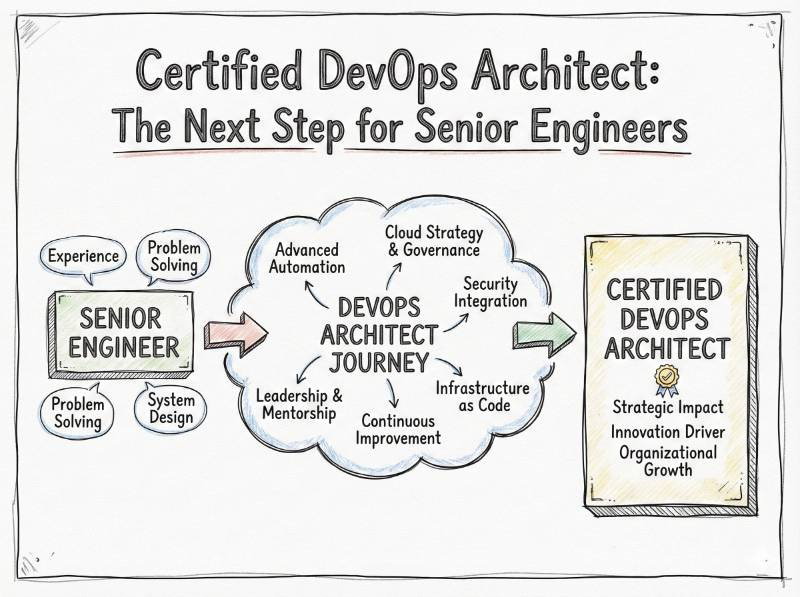
The landscape of software engineering has shifted. For a long time, the focus was simply on getting code to run. Then, it moved to getting code to run "fast." Today, the challenge isn't just speed or functionality—it’s about the entire structural integrity of the delivery system.If you have spent a few years in the industry, you’ve likely noticed a pattern: companies have plenty of people who can fix a bug or run a script, but very few people who understand how the whole machine fits together. This gap is where the Certified DevOps Architect becomes the most valuable person in the room.In this guide, we are going to look at why moving into architecture is the most logical next step for your career and how you can make that transition without getting lost in the noise of endless tools.
Why Architecture Matters More Than Ever
Most of us start our journey by mastering a few tools. You might be great at Jenkins, or maybe you are the go-to person for Kubernetes clusters. But as systems grow, they become messy. A "tool-only" approach eventually leads to what many call "spaghetti infrastructure"—a tangled web of scripts and services that no one fully understands.An architect is the person who brings order to this chaos. Instead of just building the pipeline, you are the one designing the factory. This shift from "doing" to "designing" is what separates a senior engineer from a high-level lead.
Breaking Down the Role: Engineer vs. Architect
Before we dive into the specifics of the training, let’s look at how the daily focus changes when you step into an architectural role.
What Does a Certified DevOps Architect Actually Do?
When you take on the title of a Certified DevOps Architect, your day-to-day work changes. You aren't just looking at logs; you are looking at the big picture. Here are the core pillars of the role:
1. Designing for Scale
It’s easy to manage a system for 100 users. It’s a completely different challenge when you have 100,000 users hitting the system at the same time. An architect designs systems that can expand and contract automatically, ensuring the business doesn't pay for resources it isn't using while never slowing down for the customer.
2. Building Security into the Foundation
We often talk about "shifting left," but as an architect, you make that a reality. Instead of waiting for a security audit at the end of a project, you design the environment so that security checks are as natural as a code commit. This involves everything from secret management to automated compliance.
3. Orchestrating the Ecosystem
A modern tech stack has a lot of moving parts. You have cloud providers, monitoring tools, databases, and container registries. The architect’s job is to ensure these parts talk to each other without creating friction for the developers. The goal is to make the developer's life easier, not harder.
About the Training Provider: DevOpsSchool
Choosing where to learn these advanced skills is a big decision. has become a trusted name because they focus on the reality of the job, not just the theory.
Why Their Approach Works
The platform is built for working professionals who don't have time for fluff. Their instructors are people who have spent years in the field, managing large-scale migrations and handling real-world production outages.
- Hands-on Focus: They prioritize labs over long lectures. You learn by actually building and breaking things.
- Industry Recognition: Their certifications are respected because they reflect a deep understanding of the DevOps lifecycle.
- Support for Engineers: They understand the career path of a software engineer in India and globally, providing the right context for how to grow into leadership roles.
If you are ready to see the full curriculum and how it fits into your career goals, you can find the official details here: .
Career Value: The "Architect" Advantage
Why should you bother with a certification? For many, the answer is career longevity. Tools come and go. If your entire value is based on knowing one specific version of a tool, you are at risk. But if your value is based on understanding architectural principles, you are always in demand.
Better Pay and Better Roles
Architects are consistently among the highest earners in the IT sector. This is true whether you are looking for roles in major tech hubs like Bangalore and Hyderabad or working with global firms in the US and Europe. Companies are willing to pay a premium for people who can prevent expensive mistakes before they happen.
Influence and Leadership
As a Certified DevOps Architect, you move away from being a "resource" and start being a "partner." You work with stakeholders and managers to help them understand how technology can solve business problems. This opens doors to roles like CTO, Head of Infrastructure, or Principal Engineer.
Common Mistakes to Avoid in Architecture
Even the best engineers can struggle when they first move into architecture. Here are some of the most common pitfalls:
- Over-complicating the Design: Just because you can use a complex microservices mesh doesn't mean you should. The best architects strive for simplicity.
- Forgetting the Developers: If your "perfect" architecture makes it take three hours for a developer to see their code changes, the architecture has failed.
- The "One-Size-Fits-All" Trap: Every company is different. Trying to force a "Google-scale" solution onto a small startup is a recipe for disaster.
- Ignoring Costs: Cloud bills can spiral out of control. A good architect is always looking for ways to keep the infrastructure lean and efficient.
- Lack of Communication: If you design something in a vacuum without talking to the people who will use it, no one will adopt it.
Who Is This Course For?
This isn't an entry-level program. It is designed for those who have already spent time in the trenches and are ready for the next level.
- Senior Software Engineers who want to understand the environment their code lives in.
- DevOps Engineers who want to move from "running scripts" to "designing systems."
- Site Reliability Engineers (SREs) who want to focus on high-level reliability strategies.
- IT Managers who need a deeper technical understanding to lead their teams effectively.
- Cloud Engineers looking to specialize in multi-cloud or hybrid-cloud architecture.
Frequently Asked Questions (FAQs)
1. Is it necessary to know coding for this certification?While you don't need to be a full-stack developer, a solid understanding of scripting and how software is built is essential. Architecture is about supporting the code, so you need to understand what the code needs.2. How does this help me if I already have a standard DevOps certification?A standard certification usually teaches you how to use a tool. This program teaches you how to design the whole system. Think of it as the difference between learning how to drive a car and learning how to design the engine.3. Is this recognized by global companies?Yes. The principles taught in the Certified DevOps Architect program are based on global industry standards. Whether you are in India or anywhere else in the world, these skills are highly sought after.4. Can I take this course while working full-time?Most students are working professionals. The programs are usually designed with flexible schedules to ensure you can learn without burning out.
Conclusion: Start Designing Your Future
The move to an architectural role is more than just a change in your LinkedIn title. It is a change in how you think about technology. It’s about taking responsibility for the big picture and ensuring that the systems we build today are ready for the challenges of tomorrow.By becoming a Certified DevOps Architect, you are investing in yourself. You are moving from a position where you react to problems to a position where you prevent them. It is a rewarding, challenging, and highly lucrative path for anyone serious about their career in tech.Don't wait for the industry to move past you. Take the lead, master the blueprint, and start building systems that last.
